Oleh Harun Al-Rasyid Lubis. Professor of Transportation Systems Engineering Institut Teknologi Bandung (ITB).
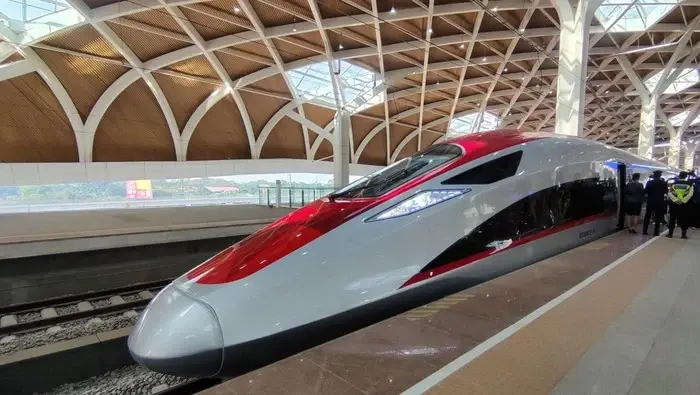
The debate surrounding the Jakarta–Bandung High-Speed Railway, Whoosh, has entered a new phase.
President Prabowo Subianto’s willingness to "pasang badan", or take responsibility, for resolving the project’s financial difficulties has shifted the discussion from whether a problem exists to how the state should deal with it.
That intervention is important. But Indonesia should not allow the immediate financing problem of one railway to define the much larger question of how Java’s transport system should develop over the coming decades.
Ronny P. Sasmito, writing on August 13 in The Jakarta Post under the title “Whoosh debt is not gone, only moved around,” examines Whoosh principally through a public-finance lens.
His central argument is straightforward: transferring the Indonesian consortium’s stake and liabilities from state-owned enterprises, controlled under Danantara, to an institution within the government’s fiscal orbit does not make the underlying obligations disappear.
It changes where the risks are carried and potentially who ultimately absorbs them.
Read Also: Why Indonesia’s Hub Port Plans in Kuala Tanjung and Bitung Have Yet to Work Effectively?
This is an important warning. Sasmito highlights cost overruns, debt servicing, foreign-exchange exposure, weaker-than-expected ridership and the consequences for the state-owned enterprises involved.
He also cautions against repeating the same financing architecture in an extension toward East Java before weaknesses in the 1st phase are addressed. Those concerns deserve serious attention. Yet they address one dimension of a larger policy question.
A balance-sheet analysis asks who ultimately pays for Whoosh. Long-term transport planning asks what railway system Java will need in 2055, 2075 and beyond.
The former examines the financial legacy of a 142-kilometer project. The latter must consider the mobility, urbanization, energy needs and economic geography of an island containing more than half of Indonesia’s population.
Indonesia needs both perspectives.
Two Problems, Not One
The lesson from Whoosh should not be reduced to “do not expand until the debt is solved”. Equally, it would be wrong to assume that expanding the network will somehow make the existing debt problem disappear.
Indonesia needs to do two things simultaneously: restructure Whoosh’s legacy financing transparently while designing the next generation of Java’s railway system on stronger economic, financial and institutional foundations.
Financial and economic viability are not identical.
A railway may not recover the full cost of long-lived infrastructure—viaducts, tunnels, stations and rights-of-way—from passenger fares alone, yet still produce wider economic returns through accessibility, productivity, energy efficiency and regional development.
Conversely, claims of wider economic benefits cannot become a blank cheque for poorly appraised projects or unsustainable financing. Future railway investment must therefore satisfy both tests: economic justification and fiscal sustainability.
Fiscal prudence tells us not to repeat Whoosh’s financing mistakes. Strategic planning tells us not to allow those mistakes to determine Java’s transport future.
The Plan Did Not Begin with Whoosh
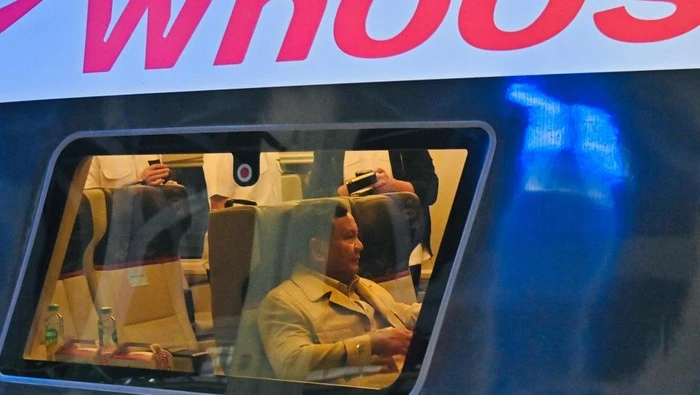
Indonesia does not need to invent a railway vision from scratch. High-speed rail development across Java has already formed part of long-term railway planning under the National Railway Master Plan, or RIPNAS.
I had the opportunity to be involved in the National Railway Revitalization Team in 2002–2004.
Even then, the fundamental challenge was clear: Indonesia needed to restore railways to a much larger role in national mobility after decades of increasing dependence on road transport.
More than two decades later, Whoosh demonstrates both how far Indonesia has travelled and how much institutional work remains. The question should therefore no longer be simply whether Jakarta–Bandung should be extended to Surabaya.
Before selecting individual projects, Indonesia should establish a long-term integrated railway plan for Java, looking toward 2055 and extending its planning horizon to 2075.
Such a horizon does not imply that planners can accurately predict technology or travel demand half a century ahead. Its purpose is to preserve options, protect strategic corridors and provide a framework within which successive investments can be evaluated.
One System, Several Layers
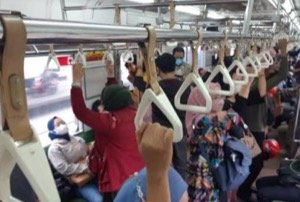
Java’s railway future should not be synonymous with high-speed rail.
It should comprise an integrated hierarchy: urban rail for metropolitan mobility, upgraded conventional rail operating at up to around 160 kilometers per hour for regional services, and dedicated high-speed rail for the highest-demand intercity corridors.
Each performs a different function. Together they create the network.
Within this framework, Indonesia should study a principal high-speed corridor along Java’s northern economic axis, beginning at Soekarno-Hatta International Airport and serving Greater Jakarta, Karawang, Cirebon, Semarang and Surabaya, with a possible later extension toward Banyuwangi subject to demand and feasibility.
The existing Whoosh corridor could then assume a different strategic role.
Rather than remaining an isolated Jakarta–Bandung line, it could become the Greater Bandung branch of the larger Java network, with a future connection from Tegalluar toward Dawuan and Kertajati International Airport and ultimately into the northern spine.
This should remain a network concept to be tested, not a predetermined engineering alignment. Alternative corridors must be evaluated against demand, cost, environmental impacts, regional development and economic returns. (to be continued)***
Simak info publik, kebijakan & geopolitik dunia di kanal Whatsapp dan Telegram The Stance.