

By Harun Al-Rasyid Lubis. Professor of the Faculty of Civil and Environmental Engineering (FTSL) Bandung Institute of Technology (ITB), was once a member of the National Railway Revitalization Technical Team, and is currently active as Chairman of the Infrastructure Partnership & Knowledge Center (IPKC).
Despite Indonesia’s ambitious plans to establish Kuala Tanjung and Bitung as international maritime hubs, the expected outcomes in terms of cargo volumes, international shipping traffic, and economic growth have not fully materialized.
The challenges are multi-faceted, involving structural issues, governance gaps, infrastructure limitations, and global market dynamics. Here’s an in-depth analysis of the key factors:
Inadequate Connectivity to Hinterlands
• Limited Multimodal Infrastructure: Ports like Kuala Tanjung and Bitung are isolated from key industrial zones due to poor road, rail, and inland waterway connections. Unlike Singapore, where the port is seamlessly integrated with global supply chains, these Indonesian ports lack effective last-mile connectivity to major production centers.
• Fragmented Logistics Ecosystem: Cargo often gets bottlenecked due to inefficient coordination between ports, trucking services, rail networks, and warehouses, leading to high logistics costs and delayed cargo movements.
Over-Reliance on Domestic Cargo Without Securing International Shipping Lines
• Lack of Anchor Shipping Alliances: Unlike Singapore, which has long-term agreements with major global shipping alliances (e.g., Maersk, MSC, CMA CGM), Indonesia’s hub ports failed to secure committed cargo volumes from international players.
• Transshipment Dilemma: The ports are overly dependent on domestic cargo flows, limiting their appeal as true transshipment hubs. Shipping lines prefer established hubs with predictable volumes and efficient services, making Singapore and Port Klang more attractive.
Inefficient Port Operations and Bureaucratic Red Tape
• Cumbersome Customs Procedures: Complex and time-consuming administrative processes for customs clearance deter international shippers who seek faster turnaround times. The absence of a single-window system delays cargo processing.
• Lack of Modern Port Technology: Port automation, digital tracking, and smart logistics management are still underdeveloped, causing longer vessel turnaround times and higher operational inefficiencies compared to Singapore’s ultra-modern port systems.
Strategic Misalignment in Port Development
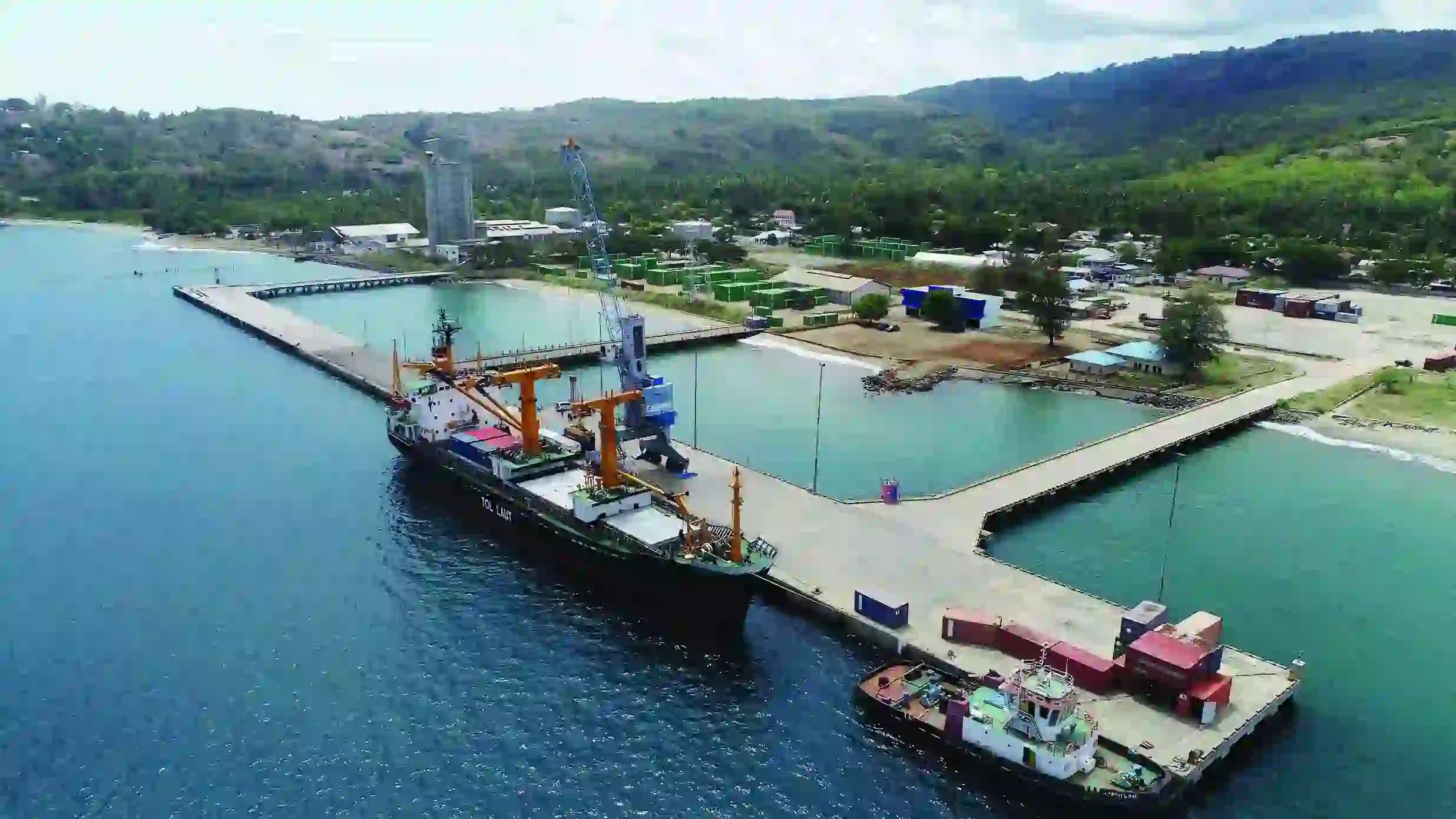 • Overambitious Without Market Demand: The development of Kuala Tanjung and Bitung often focused on infrastructure-first approaches without robust market studies to ensure sustainable demand. Ports were built with high capacity, but cargo volumes never matched projections.
• Absence of Clear Value Proposition: Neither Kuala Tanjung nor Bitung has clearly articulated what sets them apart from competitors like Singapore or Port Klang. Without a strong unique selling proposition (e.g., cost advantage, faster processing, strategic routes), they struggle to attract international shippers.
Competition from Established Regional Hubs (Singapore & Malaysia)
• Aggressive Strategies from Singapore: Singapore continues to invest in next-generation port infrastructure (e.g., Tuas Mega Port) with cutting-edge automation, economies of scale, and global connectivity that Indonesian ports struggle to match.
• Port Klang’s Strategic Advantage: Malaysia’s Port Klang benefits from a robust logistics ecosystem, strong government support, and favorable trade agreements, making it a preferred transshipment point.
Policy and Governance Challenges
• Fragmented Governance: Port governance in Indonesia suffers from overlapping authorities between the central government, local governments, and SOEs (State-Owned Enterprises), leading to inefficiency, delays, and conflicting policies.
• Regulatory Uncertainty: Frequent changes in maritime policies, lack of transparency, and regulatory unpredictability create an environment of investor uncertainty, discouraging long-term commitments from international stakeholders.
Inconsistent Investment Climate
• Limited Private Sector Involvement: While international hubs thrive on strong public-private partnerships, Indonesia’s port development is often dominated by SOEs, with limited foreign direct investment due to concerns over political and regulatory risks.
• Financing Bottlenecks: Large infrastructure projects in Kuala Tanjung and Bitung have faced funding shortfalls, leading to delayed construction, limited operational capacity, and incomplete supporting facilities.
Lack of Integrated Maritime Ecosystem
• Absence of Value-Added Services: Successful hub ports offer more than just cargo handling. Singapore, for example, thrives on value-added logistics services, such as ship repairs, maritime finance, insurance, and bunkering.
• Kuala Tanjung and Bitung lack these supporting services, limiting their attractiveness as comprehensive maritime hubs.
• Underdeveloped Industrial Clusters: Ports are most efficient when surrounded by industrial parks, manufacturing zones, and logistics centers that generate cargo. The absence of thriving industrial clusters around these ports reduces cargo generation.
Key Lessons and Strategic Recommendations
Key Challenges | Strategic Recommendation |
|---|---|
Poor hinterland connectivity | Develop multimodal transport links (rail, road, ICDs) |
Lack of shipping alliances | Secure long-term partnerships with global shipping lines |
Inefficient port operations | Implement port digitalization and automation |
Fragmented governance | Establish an independent, professional port authority |
Weak international positioning | Promote competitive transshipment tariffs and value-added services |
Investment climate issues | Create incentives for FDI and PPP in port development |
Read Also: Indonesia’s Costly Illusion of Continuity: When Budget Capacity Doesn’t Reflect the Strategic Plan
The underperformance of Kuala Tanjung and Bitung as international hub ports is not due to a lack of ambition but rather due to strategic, operational, and governance gaps.
Indonesia must shift from an infrastructure-first approach to a market-driven, integrated maritime strategy that emphasizes efficiency, connectivity, and global competitiveness.
By addressing these issues, Indonesia can reduce its dependency on Singapore and Malaysia, positioning itself as a true maritime powerhouse in the region.***
Check out the latest public policies and geopolitic news on our Whatsapp and Telegram channels.