Oleh Harun Al-Rasyid Lubis. Professor of Transportation Systems Engineering Institut Teknologi Bandung (ITB).
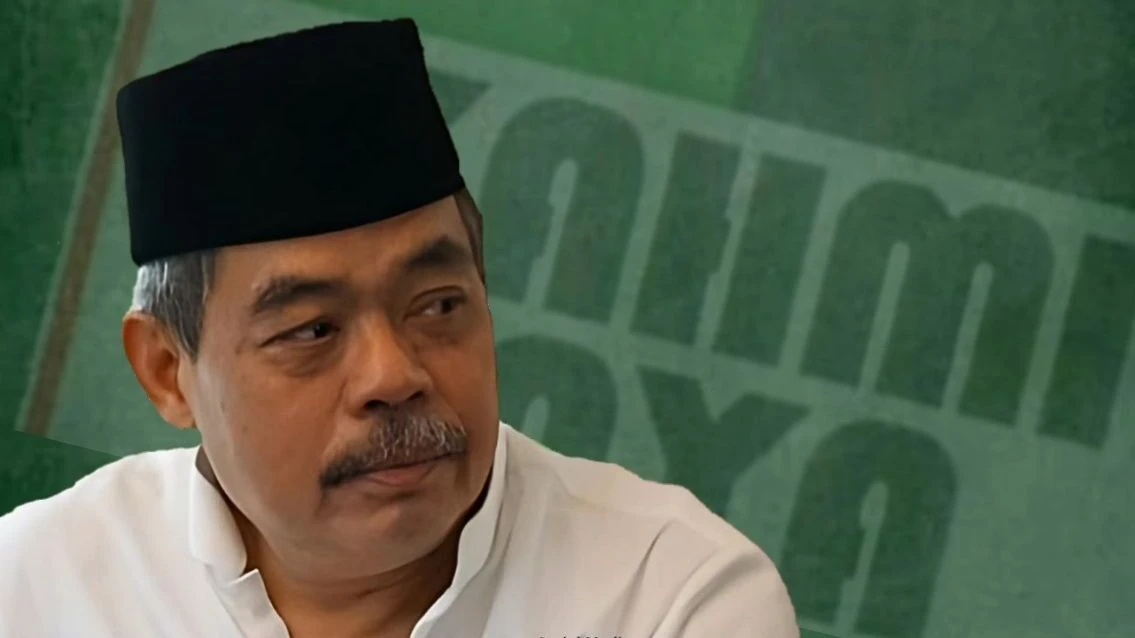
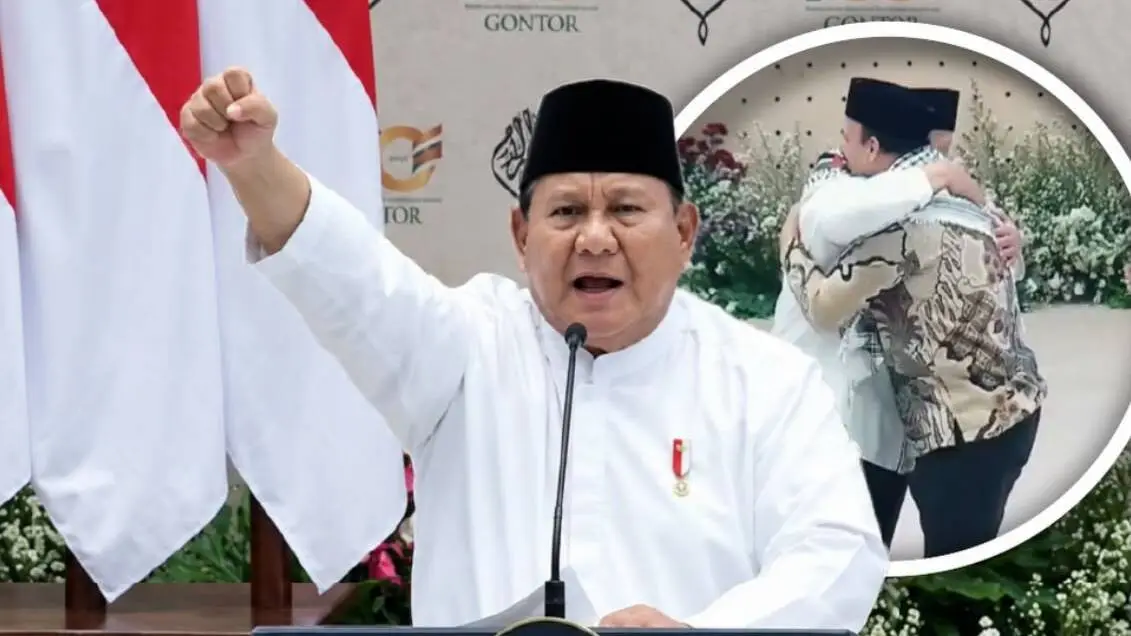
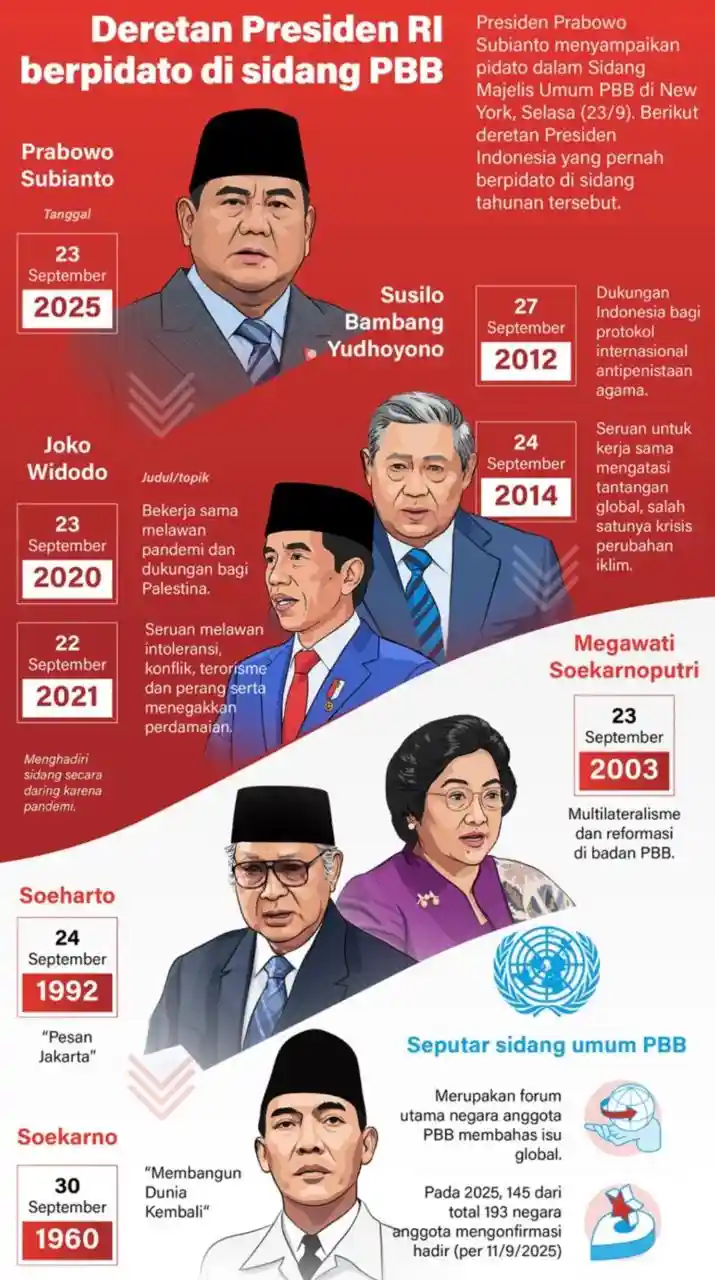
Yudi Latif’s recent reflection on Instagram, Negara yang Berujung Pilu, begins with an uncomfortable historical observation: Indonesian presidencies frequently end in disappointment, political rejection, or a striking reversal of public sentiment.
His examples extend from Sukarno and Suharto to the presidents of the Reformasi era.
The personalities, circumstances and constitutional settings differ greatly, but Latif asks whether the recurring disappointment signals something deeper than the character of individual presidents.
It is a question worth taking seriously. Yet perhaps the central problem is not that Indonesia has repeatedly failed to find the right leader. Nor is it simply that democracy is somehow culturally alien to Indonesian society.
A more troubling possibility is that Indonesia has not yet developed sufficiently mature institutions to prevent excessive national expectations from being concentrated in one person.
Presidents change. The institutional weaknesses surrounding them often change much more slowly. Indonesia may therefore need to ask an even more provocative question: how much longer will Indonesia remain politically and institutionally adolescent?
The Unfinished Business of Indonesia

Latif invokes Clifford Geertz’s description of Indonesia as giving the impression of a state manqué: a country struggling to find a political form appropriate to its complex social character.
Geertz’s observation belongs to a particular historical context, but the underlying problem remains recognizable.
Indonesia is extraordinarily plural geographically, culturally, religiously and economically. Building common institutions across such diversity is inherently difficult.
Yet the conclusion should not be that Indonesia chose the wrong constitutional form. Indonesia has already chosen a republic based on popular sovereignty and the rule of law.
The unfinished business is therefore less about replacing democracy than about making democracy work more effectively under Indonesian conditions. That requires institutional maturation.
Democracy is not sustained by elections alone. It needs capable political parties, credible law enforcement, a professional bureaucracy, economic opportunity, civic education, competitive markets, transparent political finance and institutions capable of correcting their own failures.
If these components remain weak, elections may change officeholders without sufficiently changing the state. Latif is right to emphasize the relationship between economic insecurity and political behaviour.
Someone struggling to meet daily food, health or education costs necessarily experiences political time differently from someone who is economically secure. Promises of benefits ten years from now compete with needs that must be met tonight.
Poverty Leads to Lesser Democracy?

Yet we should be careful not to turn this observation into a theory that poor citizens are inherently less capable democratic participants. Transactional politics emerges from a system. Political parties need money. Campaigns are expensive.
Candidates need organizations and mobilization. Businesses may seek regulatory access. Local brokers may distribute benefits. Voters respond to immediate incentives because long-term political promises are often uncertain.
Thus the problem is not simply poverty leading to poor democratic choices.
A more realistic chain may be: economic vulnerability --> transactional politics --> expensive elections --> dependence on financiers --> privileged access to public decisions --> economic rents --> financing of the next political cycle.
Once established, such a loop can reproduce itself regardless of who becomes president. This is why institutional reform and economic development cannot be separated.
Latif’s most important observation is that the president is only one node in a much larger system.
Around the presidency are Parliament, political parties, ministries, local governments, courts, state-owned enterprises, corporations, universities, media, professional organizations, civil society and citizens.
When these institutions underperform, Indonesian politics repeatedly returns to the expectation that the next president will somehow compensate for all of them.
Beware of Saviour-Leader Syndrome

The president must simultaneously deliver growth, eradicate corruption, create jobs, control food prices, reform education, maintain national unity, discipline the bureaucracy, manage geopolitical tensions and personify national aspirations.
Such expectations are institutionally unhealthy. They produce what might be called the saviour-leader syndrome. Every election becomes a renewed search for the exceptional individual who will finally fix Indonesia.
But development problems are not individual problems. They are network problems. The solution therefore cannot simply be better leadership. Indonesia needs better systems of leadership.
The developmental-state literature provides part of the answer. Chalmers Johnson emphasized strategic economic bureaucracy. Alice Amsden highlighted performance discipline.
Peter Evans developed the idea of embedded autonomy: government must be sufficiently connected to business to understand economic reality while remaining autonomous enough to resist capture.
More recent work has sought to adapt developmental-state thinking to democratic and globalized conditions. But contemporary Indonesia needs another step. It needs a Learning State, as already outlined in this media.
Policy learning has long been an important element of successful development. Japan, Korea and Taiwan did not merely import policies mechanically; they studied foreign experiences, adapted them and developed their own policy capabilities.
The principle is simple: problem --> experiment --> evidence --> evaluation --> learning --> correction --> scale or stop.
The Capacity to Discover Layers of Solution

A mature state does not pretend to know everything. It develops the capacity to discover what works. This may be one of Indonesia’s hardest institutional transitions.
Our political system rewards announcements. Presidents inaugurate programs. Ministers defend programs. Bureaucracies spend budgets. Politicians claim success. But who receives political credit for terminating a failed policy? Very few.
Yet a Learning State must institutionalize the right to correct mistakes. The challenge is not merely producing more data. Indonesia needs institutional arrangements in which inconvenient evidence can actually change decisions.
A major government initiative should begin with a baseline, explicit outcomes, a pilot where appropriate, independent evaluation and a predetermined review point.
If it works, expand it. If it partially works, redesign it. If it fails persistently, stop it. The most mature government report would therefore not only announce achievements.
It would contain five headings: What Worked. What Failed. What Changed. What Was Stopped. What We Learned. That would be a remarkable sign of political adulthood. None of this diminishes leadership. A president still matters enormously.
But leadership should be judged differently. The greatest leader is not necessarily the one who personally dominates the system most effectively. It may be the one who leaves behind a system that needs presidential intervention less frequently.
Continuity of Capability as The Ultimate Test
A mature presidency should strengthen bureaucratic capability, professionalize institutions, improve public information, reduce dependence on political patronage, encourage experimentation and establish mechanisms through which governments can learn across administrations.
The ultimate test of leadership is therefore continuity of capability after the leader leaves office. A president who builds strong institutions may become less indispensable. That should be considered success.
Yudi Latif closes with a powerful metaphor: perhaps Indonesia has built the house but has never completely learned how to inhabit it. That metaphor deserves to be retained—but extended.
Indonesia does not need to demolish its democratic house every time an occupant disappoints us. Nor should every political frustration reopen the question of whether democracy itself fits Indonesia.
The house has foundations worth preserving: republicanism, popular sovereignty, deliberation, constitutional government, social justice and national unity. What Indonesia still needs is a better operating system inside that house.
Political parties must mature. Citizens need greater economic security. Markets need competition. Public institutions require professional competence. Political finance needs greater transparency. Government-business cooperation must avoid capture.
Universities must become part of national problem-solving networks. Regional governments should become laboratories for innovation. And the state must acquire the institutional humility to learn.
Read Also: Whoosh and the Next Phase of Java’s Railway Planning (1): A Tale of Two Problems
The real transition Indonesia requires is therefore not from one president to another. It is from a leader-dependent state to an institution-dependent state, and eventually from an institution-dependent state to a Learning Network State.
Then leadership would no longer be judged by how much power a president accumulated, how many programs were launched, or how strongly the leader dominated public imagination.
The better question would be: did Indonesia become more capable of solving its next problem?
Perhaps that is the political maturity Indonesia has yet to achieve. The challenge is not to wait for the perfect leader.
It is to build a republic in which even imperfect leaders are constrained by strong institutions, assisted by capable bureaucracies, informed by evidence, scrutinized by citizens and required to learn from failure.
Only then may Indonesia finally escape the recurring tragedy described by Yudi Latif. The task is no longer merely finding the right occupant. It is building a house that can learn from every occupant—and become stronger after each one leaves.***
Simak info publik, kebijakan & geopolitik dunia di kanal Whatsapp dan Telegram The Stance.